Plex & multi-unit management in Toronto.
Toronto's inner neighbourhoods were built for one family per house and have spent a century being divided. Victorian and Edwardian semis in the Annex, Little Italy and Riverdale now hold two, three or four suites, often stacked over a basement unit. Since 2023 the City has allowed up to four units on residential lots citywide, so the plex stock keeps growing. We manage these houses unit by unit, with one statement for the whole building.
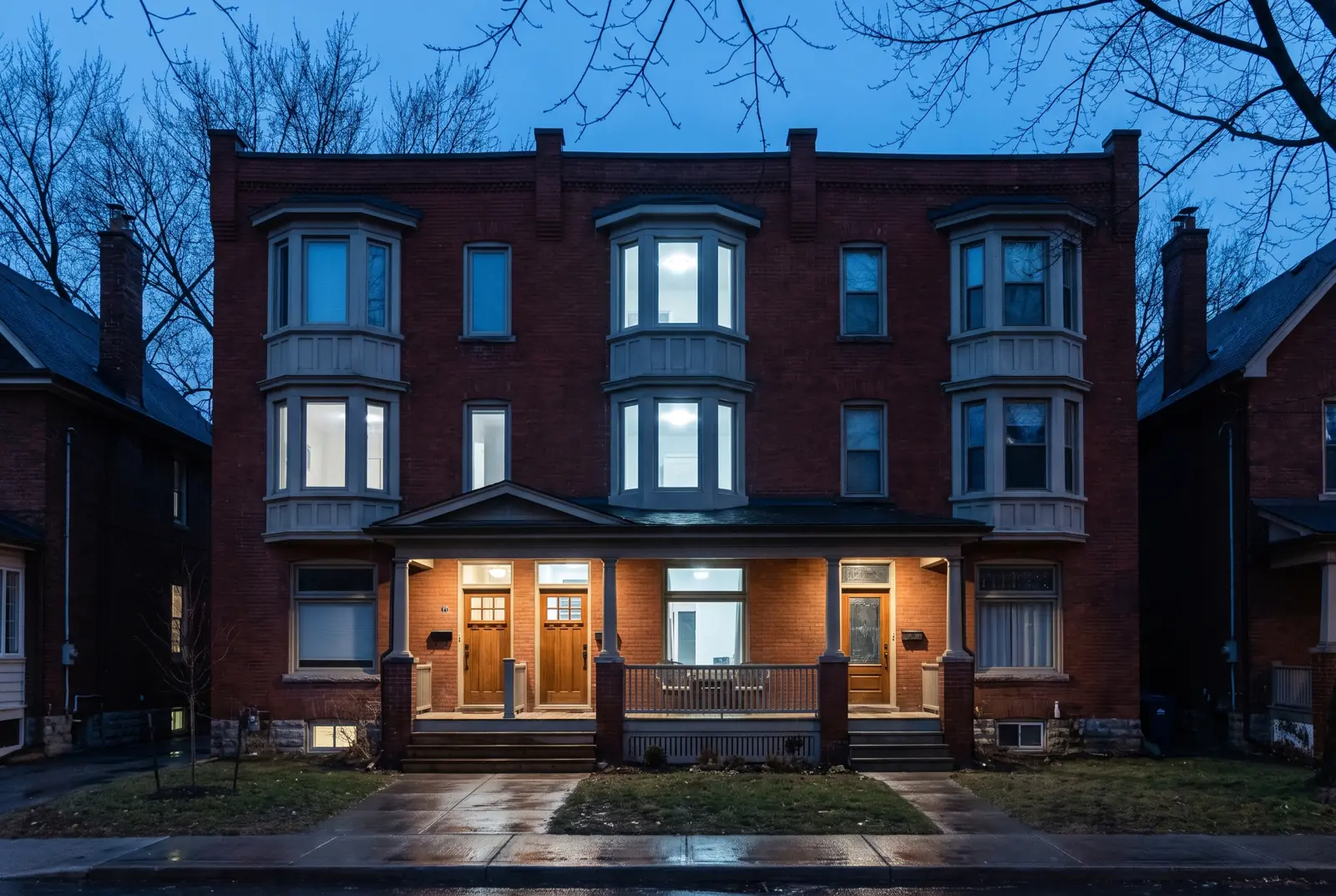
Toronto, specifically.
Plex & multi-unit management in Toronto: the local picture
Most of the city's plexes sit inside the pre-war grid: the Annex and Seaton Village west of Spadina, Little Italy and Palmerston along College, Roncesvalles and Parkdale off Queen West, and Leslieville and Riverdale east of the Don. Many are three-storey brick houses converted decades ago, with shared boilers, patched wiring and narrow side entrances. Tenants are U of T and TMU students, hospital staff from the University Avenue corridor and young professionals riding Line 2 or the King and College streetcars.
In May 2023 Toronto permitted multiplexes of up to four units across its residential zones, and in June 2025 Council allowed buildings of up to six units in nine wards, including Parkdale-High Park, Davenport, University-Rosedale and Toronto-Danforth. Laneway suites have been allowed in the old city since 2018 and garden suites citywide since 2022. Two-unit houses that already existed on July 14, 1994 fall under the Ontario Fire Code retrofit section for two-unit residential occupancies, which calls for interconnected smoke alarms and fire separations between suites. Renting four or more rooms to separate tenants who share a kitchen or bathroom creates a multi-tenant house, which needs a City licence and is a different business from a self-contained suite.
What's included
- Unit-by-unit leasing. Staggered renewals and turnovers, planned in advance.
- Common areas. Hallways, laundry, lighting, garbage and recycling schedules.
- Building systems. Shared boilers, water heaters, fire safety and alarms.
- Utility allocation. Clear lease terms for shared or separately metered utilities.
- Consolidated reporting. Every unit on one statement, with per-unit ledgers.
- Capital planning. Roof, windows, boiler — budgeted before they become emergencies.
Neighbourhoods we cover
Can my Toronto house have four units?
In most residential zones, yes. The City has permitted up to four units on a lot since 2023, and up to six in nine wards since June 2025. Lot size, height and setback rules still apply, so confirm the zoning with a designer before you buy or convert.
Is a rooming house the same as a triplex?
No: a triplex has three self-contained suites, each with its own kitchen and bathroom. Renting four or more rooms to separate tenants who share facilities makes a multi-tenant house, which has needed a City of Toronto licence since March 31, 2024.
Hand us the keys.
Tell us about your property. We'll walk it, price it, and send a plain-language proposal — no obligation.